

Duffus Castle is one of the most important medieval castles in Moray and a remarkable example of Scotland’s early Norman heritage. Located just north of Elgin, the castle was established during the 12th century by the de Moravia family, one of the most influential noble families in the region.
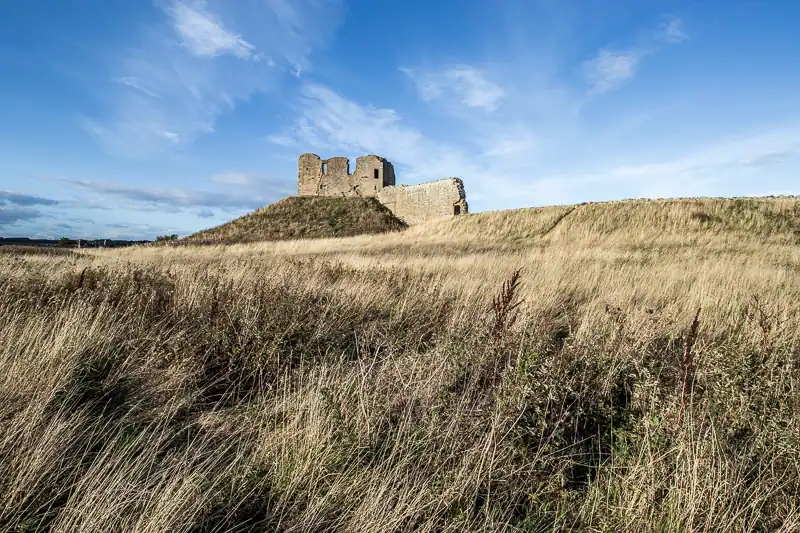
The site is best known for its impressive motte-and-bailey earthworks and the substantial stone keep that was later constructed on the mound. Over the centuries, Duffus Castle witnessed periods of growth, conflict, and decline, reflecting the changing fortunes of its owners and the wider history of medieval Scotland.
Today, the ruins remain a fascinating destination for visitors interested in architecture, archaeology, and local history. The elevated motte provides excellent views of the surrounding landscape, while the surviving remains offer a glimpse into life within one of Moray’s most significant strongholds.
History:
Duffus Castle was established around 1140 by Freskin, a Flemish nobleman who was granted lands in Moray by King David I of Scotland following the suppression of a rebellion in the region. The first castle was a timber motte-and-bailey fortress built on a large artificial mound, providing a strong defensive position in the Laich of Moray.
During the 12th and 13th centuries, Freskin’s descendants adopted the name de Moravia, later becoming one of the most powerful families in northern Scotland. Their influence spread throughout the region, and the family would eventually give rise to both the Murray and Sutherland families.
In the late 13th century, ownership of the castle passed to Sir Reginald le Chen through marriage. Around 1305, a substantial stone keep and curtain wall were constructed, replacing much of the earlier timber fortress. The new castle reflected the growing importance of Duffus as a noble residence and stronghold.
Over time, the weight of the stone keep caused instability on the motte, and parts of the structure began to lean and subside. As a result, later occupants built more comfortable accommodation within the bailey rather than continuing to use the keep itself.
The castle remained in use for centuries before finally being abandoned after 1705, when it was considered unsuitable as a residence. Today, the impressive ruins, earthworks, and leaning stone keep remain among the finest surviving examples of a medieval motte-and-bailey castle in Scotland
Architecture:
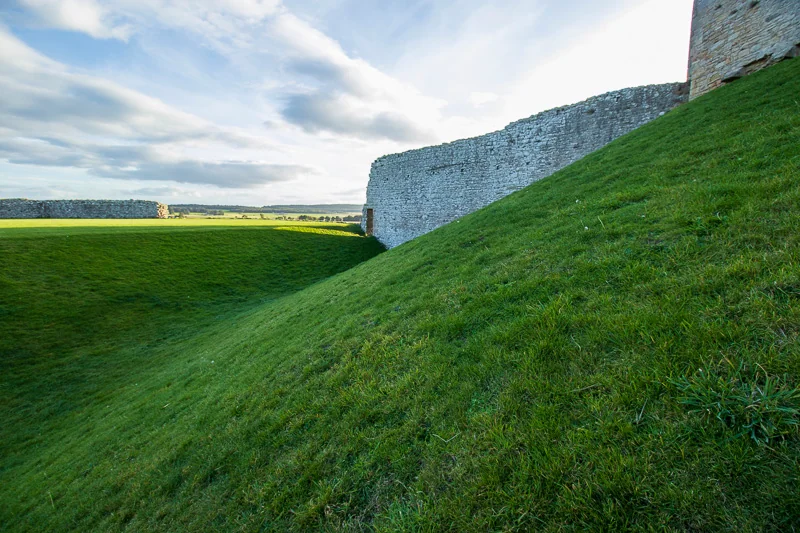
Duffus Castle stands as one of the best-preserved examples of a Norman motte-and-bailey fortress in Scotland. Built in the mid-12th century by the Flemish noble Freskin, the original castle consisted of timber buildings erected on a large artificial mound known as a motte. This elevated position was surrounded by a deep defensive ditch and an enclosed courtyard, or bailey, providing protection and control over the surrounding landscape.
During the late 13th and early 14th centuries, the timber stronghold was transformed into a substantial stone castle. A large rectangular keep was constructed atop the motte, enclosed by a stone curtain wall surrounding the bailey below. The keep served both defensive and residential purposes, featuring thick sandstone walls, multiple storeys, and accommodation suitable for a powerful noble family. The castle became one of the most important fortresses in northern Scotland and remained occupied for over five centuries.
One of Duffus Castle’s most distinctive architectural features is the dramatic tilt of its ruined keep. Built on unstable ground, the massive stone structure gradually began to sink and slide down the earthen mound. Parts of the collapsed masonry can still be seen at the base of the motte today, providing a visible reminder of the engineering challenges faced by medieval builders.
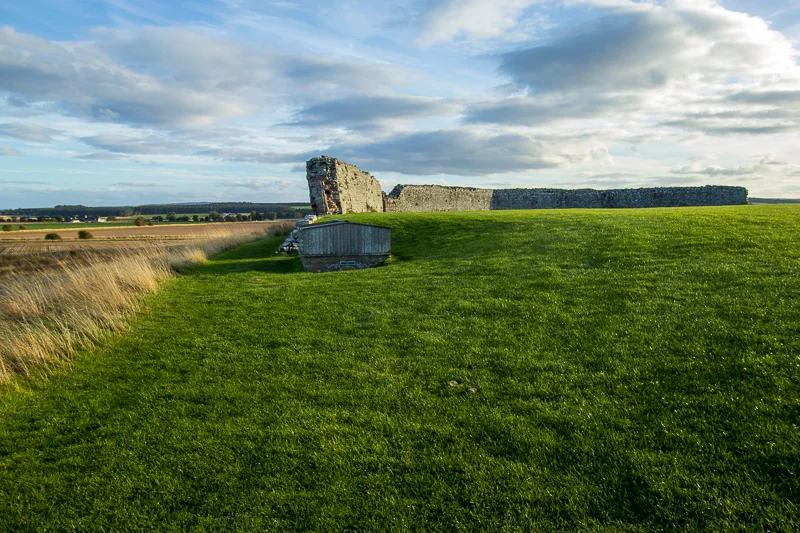
Within the bailey are the remains of later domestic buildings, including a hall and cellar ranges that replaced the original keep as the principal residence. Encircled by a water-filled boundary ditch and rising prominently above the flat landscape of the Laich of Moray, Duffus Castle remains an outstanding example of the transition from timber fortifications to sophisticated stone castle architecture in medieval Scotland.
Life at Duffus Castle:
Life at Duffus Castle revolved around the needs of a powerful medieval noble household. The castle served not only as a defensive fortress but also as the administrative centre of the surrounding estate. Lords, family members, servants, craftsmen, and soldiers lived and worked within its walls, creating a busy community at the heart of Moray.
The great hall was the social centre of castle life. Here, meals were served, visitors welcomed, and important decisions made. Food would have included locally produced grain, meat, fish, and game from the surrounding countryside. Large feasts marked special occasions and demonstrated the wealth and status of the castle’s owners.
Daily life was divided according to social rank. Noble families occupied the most comfortable chambers, while servants worked in kitchens, storerooms, and workshops. Soldiers guarded the castle, maintained its defences, and protected the estate during times of unrest.
Beyond its defensive role, Duffus Castle was a symbol of authority. The lords who lived there controlled local lands, collected rents, settled disputes, and represented royal power in the region. As the seat of the influential de Moravia family and later the Sutherlands, the castle played an important role in the political and economic life of northern Scotland.
Although the castle eventually fell into ruin, its remains still offer a fascinating glimpse into the daily lives of the nobles, servants, and soldiers who called Duffus Castle home for more than five hundred
Decline and Abandonment:
By the late medieval period, Duffus Castle’s importance began to fade. The stone keep, built upon the original earth motte, suffered from instability as the mound gradually weakened under its weight. Structural problems became increasingly difficult to manage, making the castle less practical as a residence.
As living standards changed and more comfortable homes became desirable, the powerful Sutherland family moved away from the ageing fortress. Attention shifted to nearby Duffus House, leaving the castle largely abandoned. Over time, the once-formidable stronghold fell into ruin, with weather and neglect accelerating its decline.
Today, the leaning remains of the keep stand as a striking reminder of the castle’s final centuries. Although no longer fit for occupation, the ruins continue to tell the story of a fortress that played a significant role in Moray’s medieval history for more than five hundred years.
Conclusion:
Duffus Castle stands as one of Moray’s most remarkable medieval landmarks, offering a fascinating glimpse into Scotland’s Norman heritage and feudal past. From its origins as a motte-and-bailey fortress to the imposing stone keep that still dominates the landscape, the castle played an important role in shaping the history of the region.
Although centuries of structural challenges and abandonment left the fortress in ruins, its surviving earthworks and leaning keep continue to capture the imagination of visitors today. Whether exploring its history, admiring its architecture, or discovering the legends that surround it, Duffus Castle remains a powerful reminder of Moray’s rich medieval heritage and a must-visit destination for anyone interested in Scotland’s past.
