
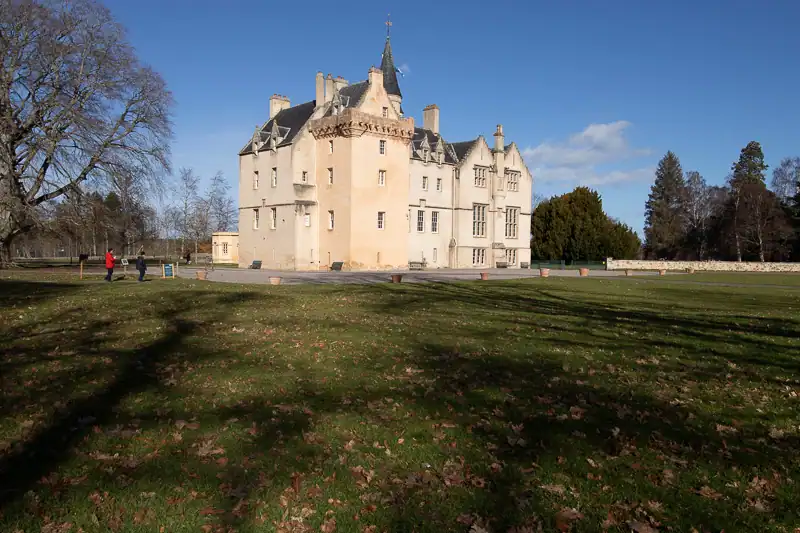
History of Brodie Castle
Brodie Castle has been closely tied to the Brodie family for centuries, with the estate believed to have been in their possession since at least the 12th century. The castle itself began as a fortified tower house in the 16th century, forming the core of the building that stands today.
Over time, the castle was expanded and altered to reflect changing needs and styles. It suffered damage during conflict in the 17th century, including a fire in 1645, but was later rebuilt and gradually transformed into a more comfortable residence.
By the 19th century, further additions had given Brodie Castle its larger, more refined appearance, blending its defensive origins with the elegance of a country house. Despite these changes, much of its historical character remains visible, particularly in its towers and older sections.
Today, the castle is cared for by the National Trust for Scotland and is open to visitors, preserving both its architecture and the long history of the Brodie family that shaped it.
What to See at Brodie Castle
Brodie Castle offers a mix of historic interiors and distinctive architectural features that reflect its long development from a fortified tower house into a more comfortable residence. Inside, the rooms are furnished with a collection of artwork, furniture, and decorative elements gathered by the Brodie family over centuries.
One of the highlights of the interior is the range of period rooms, which give a sense of how the castle was lived in during different periods. Visitors can expect to see detailed plaster ceilings, antique furnishings, and displays of ceramics and paintings, including works collected from Europe.
From the outside, the castle’s design is just as striking. Its turreted structure and contrasting sections show how it was extended over time, with older defensive elements still visible alongside later additions. The mix of styles gives the building its distinctive appearance and makes it easy to see how it evolved across centuries.
Together, the interior collections and the exterior architecture provide a clear sense of Brodie Castle’s history, not just as a defensive structure, but as a long-standing family home adapted over time.
The Surrounding Estate
The grounds surrounding Brodie Castle are a key part of the visit, offering a quieter contrast to the historic interior. Set within open Moray countryside, the estate is made up of woodland, parkland, and carefully maintained gardens that change with the seasons.
One of the most notable features of the estate is its display of daffodils, which cover large sections of the grounds in spring and have become closely associated with the castle. Across the wider grounds, visitors can explore walking paths, open spaces, and areas designed to highlight the landscape surrounding the castle.
The estate also includes smaller points of interest, such as historic features and viewpoints, which add to the sense of depth and history beyond the main building. Together, these elements make the setting feel more like a complete historic site rather than a single structure.
Whether visited for a short walk or a longer exploration, the grounds provide a relaxed way to experience the surroundings of Brodie Castle and see how the estate fits into the wider Moray landscape.
Visiting Information
Brodie Castle is well worth visiting for anyone interested in Scottish history, architecture, or quiet countryside locations. The combination of a well-preserved historic building and an expansive estate makes it more than just a single attraction, offering something for a range of visitors.
For those exploring Moray, it provides an easy and rewarding stop, with enough variety to make both a short visit or a longer stay worthwhile. While it may not have the scale of some larger castles, its character and setting give it a strong appeal.