
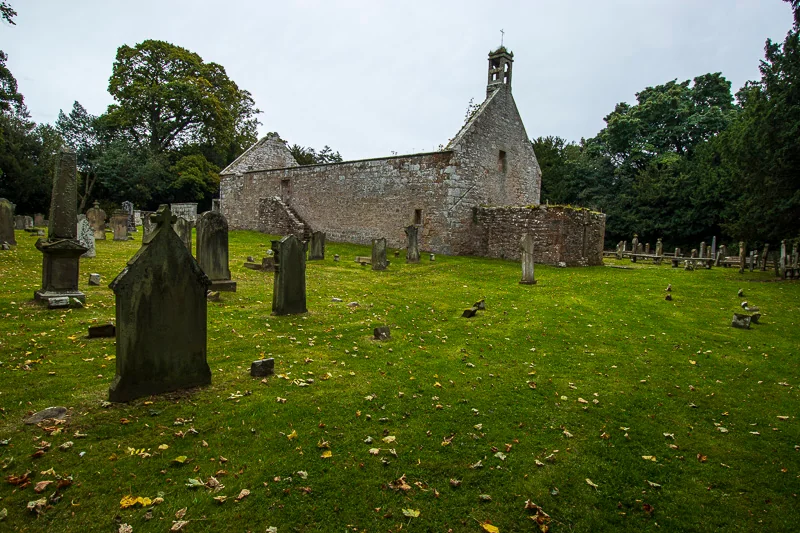
Standing amidst the tranquil Moray countryside, St Peter’s Kirk, Duffus, is one of the region’s most important surviving medieval churches. With a history stretching back more than 800 years, the kirk has witnessed centuries of change, from medieval lordship and religious devotion to the upheavals of the Scottish Reformation. Although no longer used for regular worship, its atmospheric ruins, historic graveyard, and impressive medieval parish cross continue to attract visitors interested in Scotland’s rich heritage. The church is closely linked to the history of Duffus and the nearby Duffus Castle, offering a fascinating glimpse into the religious, social, and architectural development of medieval Moray.
The History of St Peter’s Kirk, Duffus:
St Peter’s Kirk, located near the village of Duffus in Moray, is one of the region’s most significant historic church sites. For over 800 years the kirk served as the spiritual heart of the parish, witnessing centuries of Scottish history, from medieval lordship and royal conflict to religious reform and community life.
The earliest references to a church at Duffus date from the late 12th century, when the area was under the control of the powerful de Moravia family, later known as the Morays. The church was dedicated to St Peter, one of the most important saints in medieval Christianity, and quickly became an important centre of worship for local people.
During the Wars of Scottish Independence, the kirk suffered damage when the forces of King Edward I passed through Moray in the late 13th century. Historical records suggest that timber was later provided for repairs, allowing worship to continue despite the upheaval of war. The survival of the church through this turbulent period highlights its importance to the local community.
Much of the medieval structure that can be seen today dates from the 14th and 15th centuries. The surviving western tower is among the oldest features and later became associated with the Sutherland family of Duffus, who used it as a burial vault. The tower stands as a reminder of the close connections between the church and the local landowning families who shaped the history of the parish.
One of the kirk’s most striking architectural features is its finely carved south porch, completed in 1524. Richly decorated with carved stonework, coats of arms and religious symbolism, it reflects both the prosperity of the parish and the high standards of craftsmanship achieved by medieval stonemasons in Moray. The porch remains one of the best-preserved examples of its kind in northeast Scotland.
Following the Scottish Reformation of 1560, worship within the kirk changed dramatically. The ornate rituals of the medieval Catholic Church gave way to simpler Presbyterian services focused on preaching and scripture. Like many parish churches across Scotland, St Peter’s Kirk underwent alterations to accommodate these new forms of worship.
In the late 18th century, extensive rebuilding transformed much of the church. New walls and internal arrangements were introduced to serve the needs of a growing congregation. These alterations reflected changing ideas about church design during the period, while still preserving elements of the medieval structure.
The churchyard contains a remarkable collection of historic gravestones, family memorials and the famous Duffus Parish Cross. Standing over four metres high, the cross is one of the finest surviving medieval market crosses in Scotland and serves as a powerful symbol of the area’s rich heritage. Generations of local families were buried here, making the site an important record of community history.
Today, St Peter’s Kirk stands roofless but remains an impressive monument to more than eight centuries of religious, social and architectural history. Set against the Moray landscape and close to the ruins of Duffus Castle, the kirk offers visitors a tangible connection to Scotland’s medieval past and the generations who lived, worked and worshipped in the parish.
Life at St Peter’s Kirk, Duffus:
For centuries, St Peter’s Kirk was far more than a place of worship. It stood at the centre of everyday life in the parish of Duffus, serving as a gathering place where religion, community, and local affairs were closely connected.
In medieval times, the sound of the church bell marked the rhythm of life. Local families travelled from scattered farms and settlements each Sunday to attend Mass, celebrate feast days, and take part in baptisms, marriages, and funerals. The kirk was one of the few places where people from across the parish regularly met, making it an important social as well as religious centre.
Farmers, craftsmen, fishermen, and labourers would have gathered in the churchyard before and after services to exchange news, discuss local events, and conduct business. The nearby parish cross served as a focal point for markets and public announcements, helping to make the area around the kirk a hub of community activity.
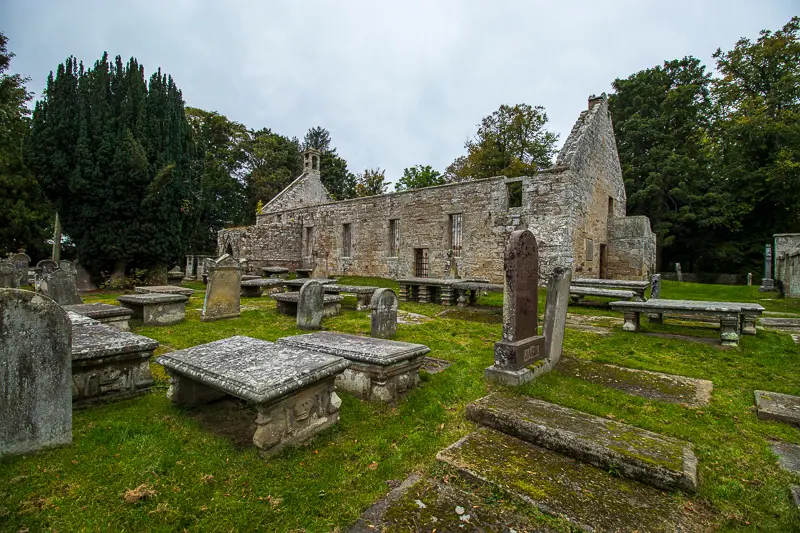
The church played an important role in significant moments throughout a person’s life. Children were baptised within its walls, couples exchanged marriage vows before family and neighbours, and generations of local residents were laid to rest in the surrounding churchyard. The gravestones that remain today tell the stories of many of the families who lived and worked in the parish over hundreds of years.
Life changed significantly after the Scottish Reformation in 1560. Catholic ceremonies gave way to Presbyterian worship, and services became simpler, focusing on preaching and scripture rather than elaborate rituals. Attendance remained central to community life, however, and church discipline often influenced social behaviour within the parish.
During the eighteenth and nineteenth centuries, St Peter’s Kirk continued to serve the growing local population. Weekly worship, communion services, parish meetings, and religious instruction brought people together and reinforced a strong sense of community identity. The churchyard remained an important place of remembrance, where families could honour previous generations.
Although the kirk eventually fell out of regular use, its ruins still reflect the lives of countless ordinary people who worshipped, celebrated, mourned, and gathered there over the centuries. Walking through the churchyard today offers a glimpse into a world where the parish church stood at the heart of daily life in rural Moray.
Architecture and Features:
St Peter’s Kirk contains several architectural features that reflect its long history and the changing styles of church building in Scotland. Although much of the structure now stands in ruins, important medieval and later elements survive, providing a fascinating glimpse into the kirk’s past.
The South Porch
The most celebrated feature of St Peter’s Kirk is the beautifully carved south porch, completed in 1524. Built during the late medieval period, it displays intricate stonework, decorative mouldings, and heraldic carvings associated with Alexander Sutherland, the Rector of Duffus. The porch is considered one of the finest examples of ecclesiastical stone carving in Moray.
The West Tower
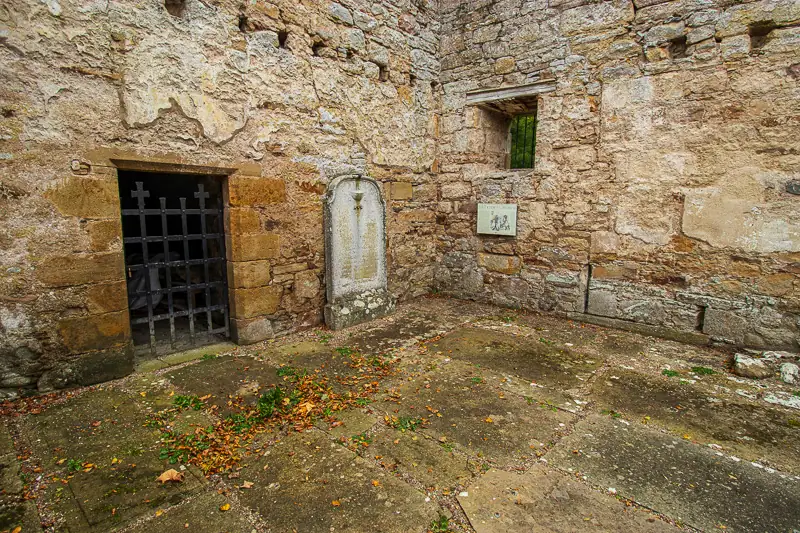
The surviving west tower dates largely from the medieval period and is among the oldest parts of the kirk. Its strong stone construction reflects both practical and defensive considerations, while its lower chamber later served as a burial vault for members of the Sutherland family.
The Parish Cross
Standing within the churchyard, the Duffus Parish Cross is one of the best-preserved medieval parish crosses in Scotland. Rising more than four metres high, it would have acted as a focal point for religious ceremonies, community gatherings, and local markets.
Historic Gravestones
The churchyard contains numerous gravestones and memorials dating from different periods of the parish’s history. These monuments provide valuable insights into the families, occupations, and lives of people who lived in Duffus over several centuries.
Eighteenth-Century Alterations
Major rebuilding in the late eighteenth century transformed the medieval church into a building better suited to Presbyterian worship. While some medieval features were retained, the interior was adapted to focus on preaching and congregational participation.
The Churchyard Setting
Surrounded by mature trees and open countryside, the churchyard offers impressive views towards nearby Duffus Castle. Together, the kirk, churchyard, and parish cross create one of Moray’s most atmospheric historic landscapes.
Today, these surviving features tell the story of a church that evolved over more than 800 years, preserving traces of medieval craftsmanship, religious change, and parish life for future generations.
Timeline of St Peter’s Kirk, Duffus:
c. 1150-1200
A church is established at Duffus during the early medieval period, serving the growing parish associated with the powerful de Moravia (Moray) family.
1190
The church is recorded as the “Church of St Peter of Duffus,” providing one of the earliest written references to the site.
1226
Historical records confirm the existence of the parish church, highlighting its importance within medieval Moray.
1298
During the Wars of Scottish Independence, the church suffers damage during the campaign of King Edward I of England through Moray.
Early 1300s
Repairs are carried out, allowing the church to continue serving the local community.
14th Century
The west tower is constructed, parts of which still survive today. The tower later becomes associated with the Sutherland family burial vault.
15th Century
Further improvements and alterations reflect the prosperity of the parish and the importance of the church in community life.
1524
Alexander Sutherland, Rector of Duffus, commissions the magnificent south porch. Its carved stonework, heraldry, and craftsmanship remain among the kirk’s finest features.
1560
The Scottish Reformation transforms religious life. St Peter’s changes from a Catholic parish church to a Presbyterian place of worship.
1600s
The kirk continues as the centre of parish life, hosting baptisms, marriages, funerals, and weekly services for local residents.
1782-1789
Major rebuilding work modernises the church to suit Presbyterian worship. Much of the visible masonry dates from this period.
1800s
St Peter’s remains the parish church for Duffus, serving generations of local families.
1900s
A newer church building eventually replaces the old kirk for regular worship, and the historic building falls out of active use.
20th Century
Conservation efforts begin to protect the ruins and the medieval parish cross.
Today
The roofless ruins of St Peter’s Kirk stand as one of Moray’s most significant historic church sites. Visitors can explore the medieval porch, tower, churchyard, and the remarkable parish cross while enjoying views towards nearby Duffus Castle.
Stories and Legends of St Peter’s Kirk, Duffus:
Historic churches are often surrounded by local stories, traditions, and folklore, and St Peter’s Kirk is no exception. While some tales are rooted in documented history and others in local tradition, they help bring the site to life.
The Church That Survived War
One of the most remarkable chapters in the kirk’s history dates to the Wars of Independence. After being damaged during the campaign of King Edward I in 1298, the church was repaired and continued serving the community. For medieval parishioners, the rebuilding of the kirk would have been seen as a symbol of resilience and faith during uncertain times.
The Sutherland Family Vault
The old west tower became the burial place of the Sutherland family of Duffus. Generations of the family were laid to rest within the church grounds, creating a strong connection between the kirk and one of the area’s most influential families. Visitors today can still imagine the funeral processions that once passed through the churchyard centuries ago.
The Ancient Parish Cross
Standing proudly in the churchyard is the famous Duffus Parish Cross. Local tradition holds that the cross witnessed centuries of gatherings, markets, proclamations, and celebrations. It would have been a familiar sight to every resident of the parish and remains one of the kirk’s most iconic features.
A Gathering Place for the Community
Before newspapers, telephones, and social media, the churchyard was where people learned the latest news. After Sunday services, parishioners exchanged stories, arranged marriages, discussed harvests, and shared local gossip. In many ways, St Peter’s Kirk was the medieval equivalent of the village square.
Echoes of the Past
Many visitors describe the ruins as possessing a peaceful atmosphere. Walking among the gravestones and ancient stonework, it is easy to imagine the generations who worshipped here. The worn memorials and medieval carvings serve as reminders of the countless lives connected to the kirk over more than eight centuries.
The Lost Voices of the Kirk
Perhaps the greatest story is the one that remains untold. Thousands of baptisms, marriages, funerals, and ordinary Sunday services took place within these walls. Most of the people who gathered here left little trace in the historical record, yet their lives shaped the parish and helped build the community that exists today.
Final Thoughts:
Standing among the weathered stone walls of St Peter’s Kirk, it is easy to imagine the generations who gathered here over the centuries. From medieval worshippers and local landowners to farmers, craftsmen, and families of the parish, countless lives were connected to this historic site.
Although the kirk now stands in peaceful ruin, its story continues to resonate through the surviving architecture, ancient gravestones, and remarkable parish cross. Together, they offer a tangible link to the people, traditions, and events that shaped Duffus and the wider Moray landscape.
Whether you are drawn by its history, architecture, or tranquil setting, St Peter’s Kirk remains a powerful reminder of Scotland’s rich heritage. More than eight centuries after its foundation, it continues to inspire visitors and preserve the memory of a community whose story is written in stone.
“In the shadow of nearby Duffus Castle, St Peter’s Kirk stands as a lasting tribute to faith, resilience, and the generations who called this corner of Moray home.”
