Pluscarden Abbey: A Living Monastic Tradition:
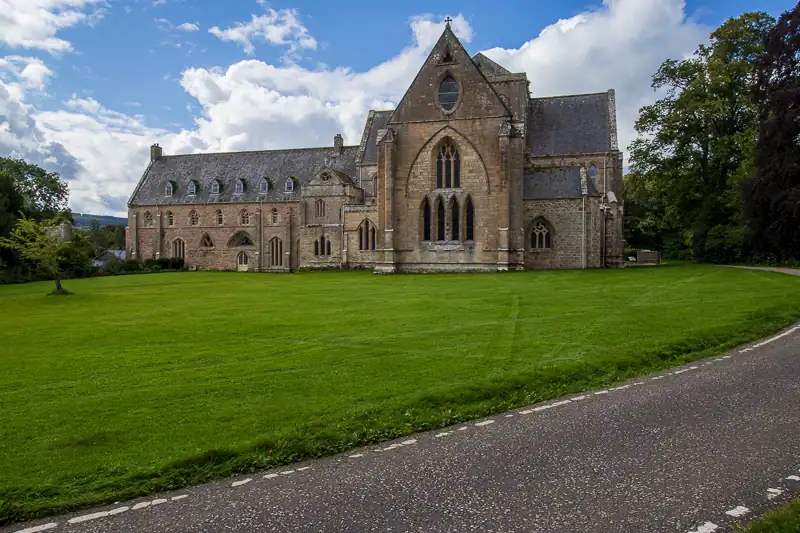
Pluscarden Abbey is a historic Benedictine monastery located in a secluded valley near Elgin in Moray, Scotland. Founded in 1230 by King Alexander II, it is one of the most important medieval religious sites in Scotland and remains an active monastic community today.
Originally established as a Valliscaulian priory, the abbey became part of the Benedictine Order in 1454. Despite periods of decline following the Scottish Reformation, it was restored in the twentieth century and continues to serve as a place of worship, prayer, and spiritual retreat.
Renowned for its beautiful medieval architecture, peaceful surroundings, and rich religious heritage, Pluscarden Abbey attracts visitors from around the world. It offers a unique insight into Scotland’s monastic past and remains one of the few medieval monasteries in Britain still used for its original purpose.
The Story of Pluscarden Abbey:
Pluscarden Abbey was founded in 1230 by King Alexander II of Scotland and is one of the oldest surviving medieval monasteries in Scotland. Originally established by the Valliscaulian Order, the abbey later adopted the Benedictine Rule and became an important centre of religious worship and learning in northern Scotland. [
During the centuries that followed, Pluscarden Abbey grew in influence and played a significant role in the spiritual life of the region. However, like many religious institutions in Scotland, it suffered during the Reformation of the sixteenth century, when monastic life declined and many of the abbey’s buildings fell into disrepair.
For several centuries the abbey remained largely abandoned, but in the twentieth century a major restoration project began. Benedictine monks returned to the site, reviving the ancient traditions of prayer, study, and community life. Thanks to these restoration efforts, Pluscarden Abbey once again became a thriving monastery.
Today, Pluscarden Abbey is unique as one of the few medieval British monasteries still inhabited by a working community of monks. It continues to welcome visitors and pilgrims while preserving over seven centuries of religious heritage and tradition.
Life in the Monastery:
A community of Benedictine monks lives and works at Pluscarden Abbey, continuing a monastic tradition that dates back centuries. The monks follow the Rule of Saint Benedict, which emphasises prayer, work, study, and community life. Their daily routine is centred around regular worship services in the abbey church, along with periods of private prayer, spiritual reading, and practical duties around the monastery.
Life at the abbey follows a peaceful and structured rhythm. In addition to maintaining the monastery and its grounds, the monks welcome visitors, pilgrims, and retreat guests seeking a place of reflection and spiritual renewal. The community is dedicated to preserving the religious traditions of the abbey while continuing its role as a living centre of worship in Scotland.
Today, the monks of Pluscarden Abbey play an important role in maintaining one of Scotland’s few remaining active medieval monasteries. Their commitment to faith, hospitality, and community life helps preserve the abbey’s unique atmosphere of peace and contemplation for future generations.
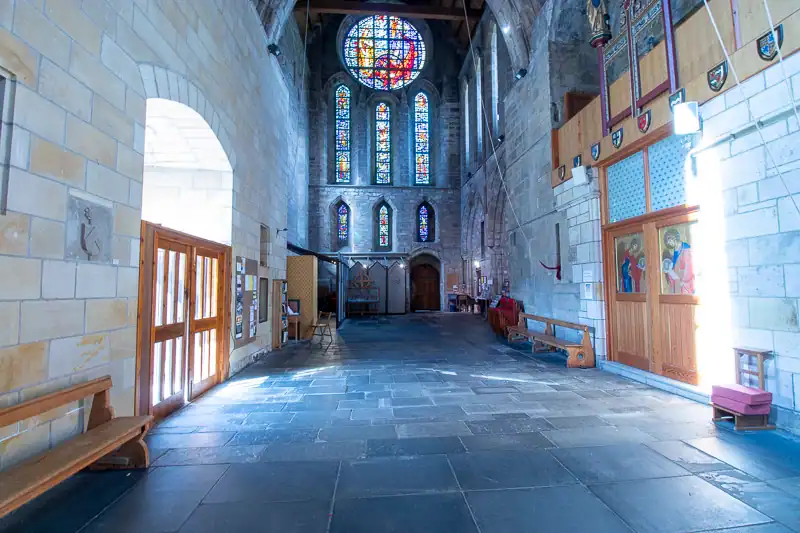
The Historic Chapel of Pluscarden Abbey:
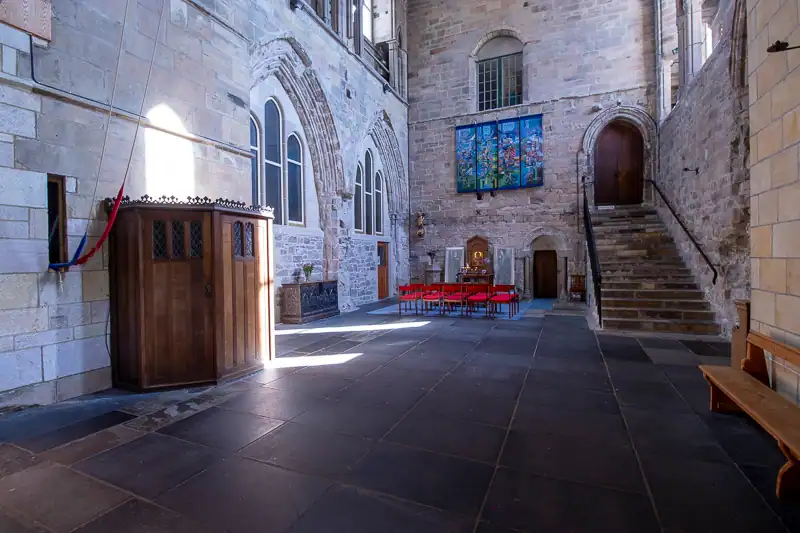
The chapel and abbey church at Pluscarden Abbey form the spiritual heart of the monastery. For centuries, it has been the place where monks gather daily for prayer, worship, and the celebration of Mass. Its peaceful atmosphere, beautiful stone architecture, and historic features reflect the abbey’s long religious heritage dating back to the thirteenth century.
Visitors to the chapel are often struck by its sense of tranquillity and reverence. The interior features elegant arches, historic stonework, and stained-glass windows that create a calm and contemplative setting. As an active place of worship, the chapel continues to play a central role in the daily life of the Benedictine community.
Today, the chapel remains open to worshippers, pilgrims, and visitors seeking a moment of quiet reflection. The sound of Gregorian chant and the regular cycle of monastic prayer help preserve a tradition that has been maintained at Pluscarden Abbey for generations.
Architectural Heritage of Pluscarden Abbey:
Pluscarden Abbey is one of Scotland’s finest surviving medieval monasteries, renowned for its exceptional blend of Romanesque and Gothic architecture. Founded in the 13th century, the abbey features impressive stonework, graceful arches, and historic ecclesiastical design that reflect centuries of monastic craftsmanship. Today, visitors can admire its beautifully preserved buildings, tranquil setting, and enduring architectural heritage, making it one of the country’s most significant religious landmarks.
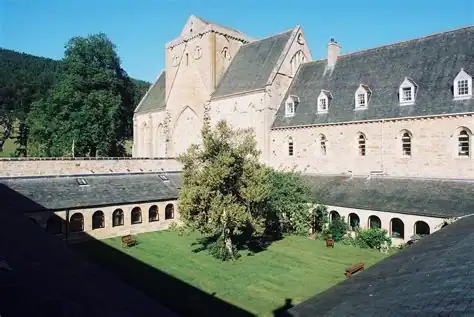
The Cloister at Pluscarden Abbey:
At the heart of Pluscarden Abbey lies its tranquil cloister, one of the most striking and contemplative spaces within the monastery. Surrounded by stone arcades and overlooking a peaceful garden courtyard, the cloister forms the architectural and spiritual centre of monastic life. For centuries, such spaces have provided monks with a place for silent reflection, prayer, reading, and movement between the different parts of the abbey.
The abbey itself was founded in 1230 and stands in the secluded valley of the Black Burn near Elgin, Moray. Today it remains an active Benedictine monastery and is recognised as the northernmost Benedictine abbey in the world. The cloister reflects both the medieval origins of the monastery and the extensive restoration work undertaken after the return of monastic life in the twentieth century.
Walking through the cloister, visitors encounter an atmosphere of simplicity and serenity. The rhythm of the arches, the carefully maintained lawn, and the surrounding stonework create a sense of enclosure that separates the monastic community from the distractions of everyday life. The cloister is not merely an architectural feature but an expression of the Benedictine ideal of balance between prayer, work, and contemplation.
Throughout its history, Pluscarden Abbey experienced periods of decline, particularly after the Scottish Reformation, when monastic life ceased and many of the buildings fell into ruin. Following the arrival of Benedictine monks in 1948, restoration efforts gradually revived the abbey, including work on the cloister and surrounding monastic buildings. The restored cloister now serves both the resident monks and the many pilgrims and visitors who are drawn to the abbey’s unique spiritual character. More than an attractive courtyard, the cloister remains a living symbol of continuity, linking the modern monastic community with nearly eight centuries of religious life in the Moray countryside.
The Bells of Pluscarden Abbey:
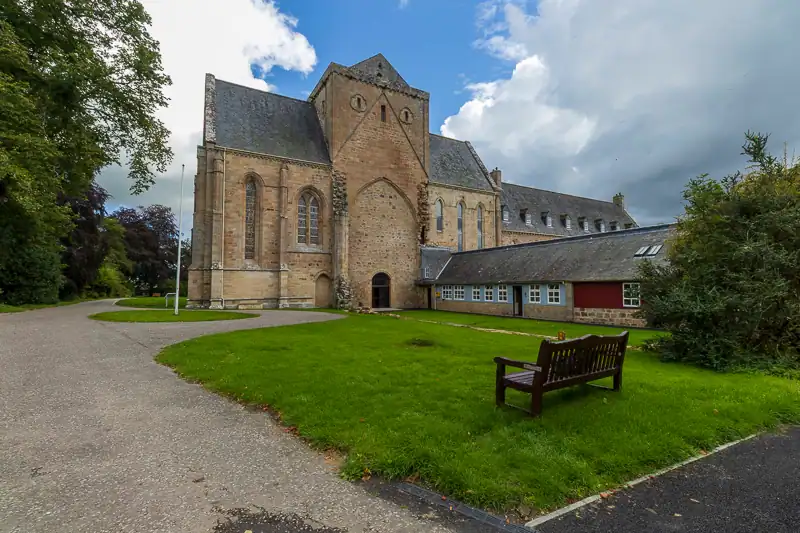
The bell tower of Pluscarden Abbey is one of the monastery’s most distinctive architectural features and serves as a visible symbol of its centuries-old religious tradition. Rising above the abbey buildings, the tower has long played an important role in monastic life, with its bells calling the monks to prayer and marking the rhythm of the day. The sound of the bells continues to echo across the peaceful Moray countryside, connecting modern visitors with a tradition that stretches back hundreds of years.
Throughout its history, the tower has witnessed periods of prosperity, decline, and restoration. Today, it remains an important part of the abbey’s identity, standing as a reminder of the resilience of Pluscarden Abbey and its enduring spiritual heritage. Visitors can admire the tower’s historic stonework and appreciate its role as a landmark within one of Scotland’s few active medieval monasteries.
The Benedictine Way of Life:
For more than fifteen centuries, Benedictine monks have followed a spiritual tradition rooted in the teachings of Saint Benedict of Nursia. Guided by the Rule of Saint Benedict, they dedicate their lives to seeking God through prayer, work, study, and community life. This balanced approach, often summarized by the phrase Ora et Labora (“Pray and Work”), has shaped monasteries and influenced Christian spirituality across generations.
Benedictine life is centered on a daily rhythm of worship, reflection, and service. Monks gather throughout the day for communal prayer, share responsibilities within the monastery, and devote time to reading and contemplation. Through this disciplined yet compassionate way of life, they strive to cultivate humility, obedience, stability, and hospitality.
Historically, Benedictine monasteries have served as important centers of learning, culture, and charitable outreach. They have preserved manuscripts, advanced education, welcomed pilgrims and travelers, and provided support to local communities. Their commitment to hospitality remains one of the most recognizable features of the Benedictine tradition.
Today, Benedictine monks continue to live according to these ancient principles while responding to the needs of the modern world. Whether through pastoral ministry, education, spiritual guidance, or community service, they seek to embody the values of faith, peace, and stewardship that have defined their order for centuries. Their enduring witness offers a model of intentional living, grounded in prayer, meaningful work, and a deep sense of community.
Pluscarden Abbey Timeline: Eight Centuries of History:
1230
King Alexander II founds Pluscarden Abbey in Moray as a monastery of the Valliscaulian Order.
13th Century
The abbey develops into an important religious centre, serving the spiritual needs of the surrounding region.
15th Century
Pluscarden Abbey adopts the Benedictine Rule and becomes part of the Benedictine tradition.
16th Century
The Scottish Reformation brings major changes to religious life. Monastic activity declines, and many of the abbey buildings fall into disrepair.
17th-19th Centuries
The abbey remains largely abandoned, with much of the historic complex gradually deteriorating over time.
1948
Benedictine monks return to Pluscarden Abbey, re-establishing monastic life after centuries of decline.
20th Century
Extensive restoration work is carried out to preserve and rebuild the abbey, allowing it to function once again as a working monastery.
Present Day
Pluscarden Abbey remains one of Britain’s few active medieval monasteries, home to a community of Benedictine monks and welcoming visitors, pilgrims, and retreat guests from around the world.
Guest Accommodation at Pluscarden Abbey:
Pluscarden Abbey offers accommodation for guests who wish to spend time in prayer, retreat, study, or quiet reflection within the peaceful setting of the monastery. The Abbey’s tradition of hospitality welcomes visitors who seek spiritual renewal and an opportunity to share in the daily rhythm of Benedictine life through attendance at Mass and the Divine Office.
Men’s Guest House
The Men’s Guest House provides comfortable accommodation for male visitors wishing to stay at the Abbey. Situated within the monastic precincts, it offers a simple and peaceful environment suited to retreat, reflection, and participation in the liturgical life of the community. The accommodation reflects the Benedictine values of simplicity, hospitality, and prayer, allowing guests to experience the unique atmosphere of one of Britain’s oldest living monasteries.
St Joseph’s Guest House
The new St Joseph’s Guest House was officially opened in 2025 following many years of planning and development. Built primarily to accommodate women guests and retreatants, it significantly enhances the Abbey’s ability to welcome visitors while maintaining its long tradition of hospitality.
Constructed in traditional stone and carefully designed to complement the historic architecture of the Abbey, the building features a handsome stone façade, dormer windows, a pitched roof, and an elegant central entrance. Its appearance harmonises perfectly with the surrounding monastic buildings, giving the impression that it has always been part of the abbey landscape while providing modern standards of comfort and convenience.
The guest house stands as an important addition to the Abbey, combining contemporary accommodation with the timeless beauty of the medieval monastic setting. It also features a life-size stone statue of St Joseph and has been widely praised for both its quality and sensitivity to the historic environment.
A Place of Peace and Prayer
Both guest houses enable visitors to enjoy the tranquillity of the beautiful valley in which Pluscarden Abbey is located, approximately six miles southwest of Elgin. Guests can participate in the daily worship of the monastery, walk the peaceful grounds, and experience the silence and beauty that have attracted pilgrims and retreatants for generations. The accommodation offers a unique opportunity to step away from the demands of modern life and enter into the atmosphere of prayer, reflection, and Benedictine hospitality that characterises the Abbey.

The Wolf of Badenoch and Pluscarden Abbey:
One of the most dramatic episodes in the history of Pluscarden Abbey took place in 1390, when the feared Highland noble Alexander Stewart, better known as the Wolf of Badenoch, launched a destructive raid across Moray. Following a bitter dispute with Bishop Alexander Bur of Moray, Stewart led his followers through the region, leaving a trail of devastation.
During the raid, the magnificent Elgin Cathedral was burned, and Pluscarden Priory, as the abbey was then known, is believed to have suffered damage as well. The attack came at a difficult time for the monastery, which was already facing financial and political challenges.
Although repairs were carried out in the years that followed, the priory never fully recovered its former prosperity. Yet despite fire, conflict, and centuries of upheaval, Pluscarden survived. Today, visitors can still walk through the peaceful grounds and reflect on the remarkable resilience of a monastery that has endured for almost 800 years.
Pluscarden Abbey: Home of Scotland’s Benedictine Monks:
Nestled in a peaceful wooded valley in Moray, Pluscarden Abbey is located around six miles (10 km) southwest of Elgin, in the north-east of Scotland. Surrounded by rolling countryside and the tranquil waters of the Black Burn, the abbey offers visitors a unique escape from modern life.
Founded in 1230, the abbey enjoys a secluded setting that has attracted monks and pilgrims for centuries. Despite its rural location, it is easily accessible by road from Elgin, making it one of Moray’s most popular historic and spiritual landmark.
Today, visitors come not only to admire the medieval architecture but also to experience the peaceful atmosphere of the glen, where Benedictine monks continue a tradition of prayer and worship that has endured for almost 800 years.
Did you know? Pluscarden Abbey is the only medieval monastery in Britain still being used for its original purpose by a resident monastic community